


Rotary Mechanical Bar Screen: Buyer's Selection Guide
Choosing the right Rotary Mechanical Bar Screen determines whether a wastewater line runs for a decade without a pump failure or clogs within its first flood season. This guide breaks down the mechanics, the performance data that matters, and the exact specifications a buyer should verify before signing a purchase order.
What a Rotary Mechanical Bar Screen Actually Does
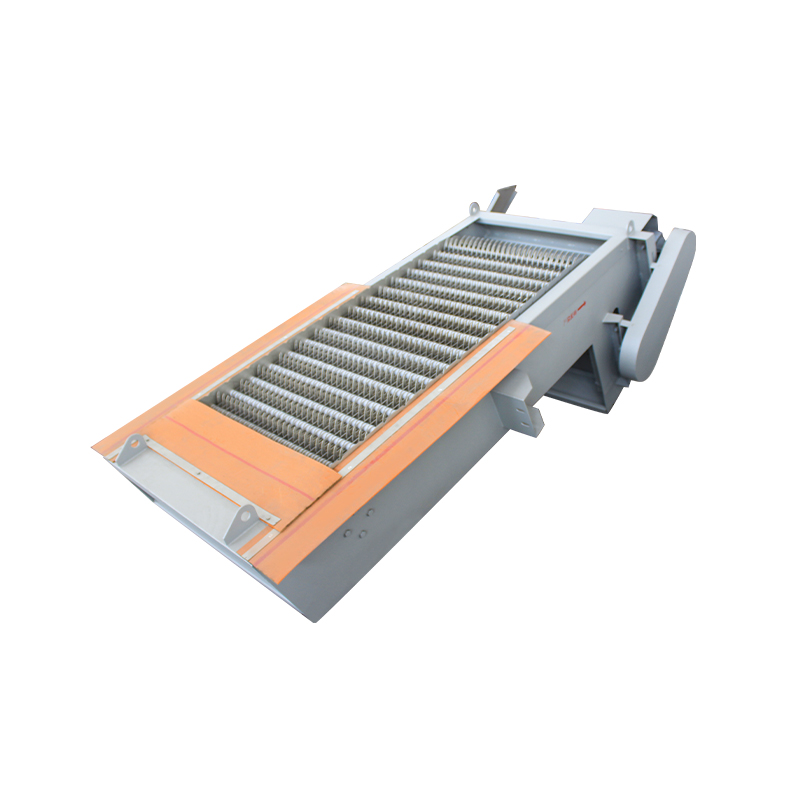
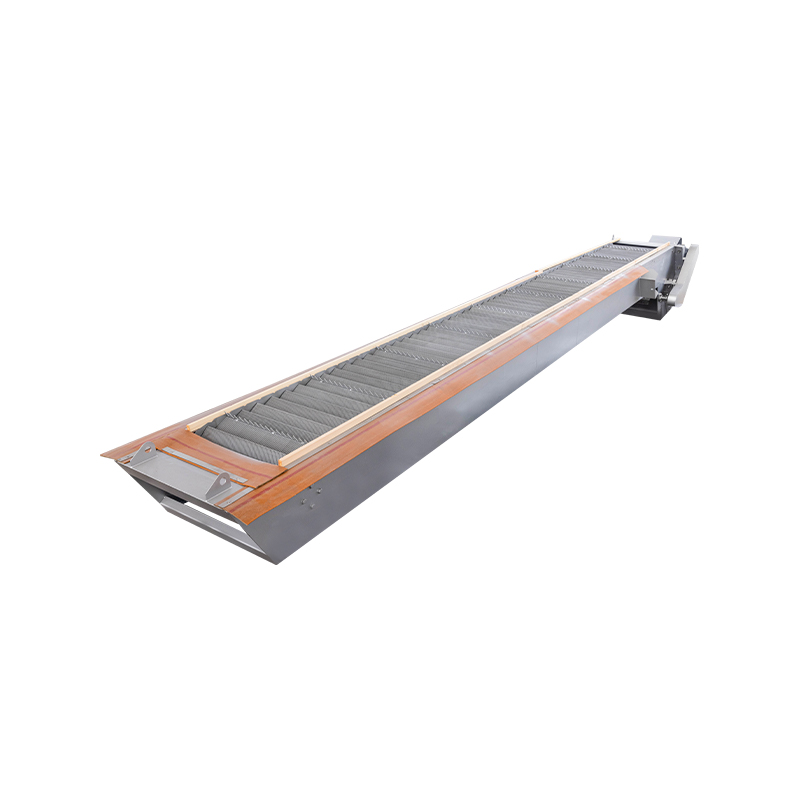
A rotary mechanical bar screen is a motor-driven rake system that continuously intercepts coarse solids from a wastewater channel and lifts them out of the flow path without stopping the process. Unlike static bars that require an operator with a rake, this equipment cycles automatically, moving debris from the water surface to a discharge chute on a fixed or flow-triggered schedule.
Three functions define the category: coarse solid separation, continuous pretreatment, and mechanical protection of everything downstream, from centrifugal pumps to membrane bioreactors. A screen that fails at any one of these shifts the maintenance burden onto equipment that costs far more to repair.
How the Rotating Rake Mechanism Works
Wastewater enters the channel and passes through fixed screen bars set at a defined spacing. Solids larger than that spacing are trapped on the upstream face. A rake arm, driven by a chain or gear transmission, sweeps across the bar face, lifts the captured material above the water line, and deposits it into a discharge point, typically a chute, bin, or conveyor. The cleaned rake returns to the base of the channel and repeats the cycle, either continuously or on a timer tied to differential water level.
The mechanical simplicity is the point. Fewer moving parts than a traveling band screen means fewer failure modes, and a single motor typically drives the entire cycle.
Key Advantages Buyers Should Weigh
Solids Capture and Equipment Protection
A properly specified Rotary Mechanical Bar Screen captures plastics, fibers, leaves, and paper waste before they reach a pump impeller. Downstream protection is the primary economic justification for the equipment; a single pump rebuild often costs more than a year of screen maintenance.
Labor Reduction
Continuous automatic cleaning removes the need for a technician to manually rake a channel during storm events, when solid loading spikes fastest and staffing is often thinnest.
Service Life in Harsh Conditions
Stainless steel construction resists the hydrogen sulfide corrosion common in sewage environments, extending service intervals well beyond mild-steel alternatives.
A screen that is undersized for peak wet-weather flow will bypass solids rather than stop them. Flow capacity, not average daily flow, is the number that should drive channel and bar spacing decisions.
Where Rotary Mechanical Bar Screens Are Used
- Municipal wastewater plants — coarse solid removal ahead of grit chambers and primary clarifiers
- Industrial wastewater lines — factory and manufacturing discharge pretreatment
- Food processing facilities — organic residue and particulate removal from meat and vegetable processing water
- Paper and pulp mills — fiber recovery combined with solids separation
- Power plant intakes — cooling water and river water screening to protect heat exchangers
Rotary Mechanical Bar Screen vs Manual Screening
| Feature | Rotary Mechanical Bar Screen | Manual Bar Screen |
| Operation | Automatic, continuous | Manual raking required |
| Labor demand | Low | High |
| Peak flow performance | Stable under high flow | Limited capacity |
| Maintenance pattern | Scheduled, automated cleaning | Frequent, reactive cleaning |
| Typical setting | Municipal and industrial plants | Small-scale sites |
How to Choose the Right Unit: A Step Sequence
- Confirm peak wet-weather flow rate. Design to the flow spike, not the daily average, or the screen will bypass solids during storms.
- Define the solid waste profile. Fibrous industrial waste and municipal grit require different bar spacing and rake torque.
- Match channel dimensions and installation angle. Retrofits into existing channels constrain both width and incline options.
- Verify material grade. Confirm 304 or 316 stainless specification in writing, not just "stainless steel" on a spec sheet.
- Check motor reliability and duty rating. Continuous-duty motors are built for this cycle; intermittent-duty motors are not.
- Evaluate the supplier's engineering and after-sales support. Custom channel widths and installation guidance separate a working retrofit from a costly one.
Frequently Asked Questions
What bar spacing is typical for a rotary mechanical bar screen?
Spacing is application-specific, but coarse municipal screening commonly falls in the range that captures material larger than roughly 6 to 25 millimeters, while fine screening applications use tighter spacing to protect membrane or biological processes.
How often does a rotary mechanical bar screen need maintenance?
With continuous automatic cleaning, scheduled inspection is typically quarterly to semiannual, covering chain tension, bar wear, and motor performance, far less frequent than the daily attention manual screens require.
Can a rotary mechanical bar screen be retrofitted into an existing channel?
Yes, provided channel width and depth are confirmed against the manufacturer's frame dimensions. Many suppliers offer custom-width frames specifically for retrofit projects.
What material grade should industrial buyers specify?
304 stainless steel handles most municipal and light industrial wastewater, while 316 stainless is the standard specification for higher-chloride or more corrosive industrial discharge.
 |  |
Cooperemos con la protección del medio ambiente de Yixing Hengye
Contact Us
- Categorías de productos
- Máquina de deshidratación de lodos
- Filtro de rodillo
- Máquina de flotación por aire disuelto (DAF)
- Barra Mecánica Rotativa
- Dispositivo de dosificación
- aireador
- Material de embalaje biológico
- Otros equipos de tratamiento de aguas residuales
- Contáctenos
-
-
[email protected]

[email protected] -
+86-13812201185

-
+86-13812201185

-
No. 20, Saite Road, aldea de Gaoyao, ciudad de Gaocheng, ciudad de Yixing, ciudad de Wuxi, provincia de Jiangsu, China

-



