


MBR vs MBBR · differences explained
One letter apart: MBR and MBBR — what’s the real difference? Read this article and you’ll understand
Anyone who has worked in wastewater treatment for a while has certainly heard the two names: MBR and MBBR. Many newcomers feel confused: only one letter apart, both sound like “advanced processes”, but what’s the actual difference? When I first encountered MBBR around 2016, I thought it was just an upgraded version of MBR.
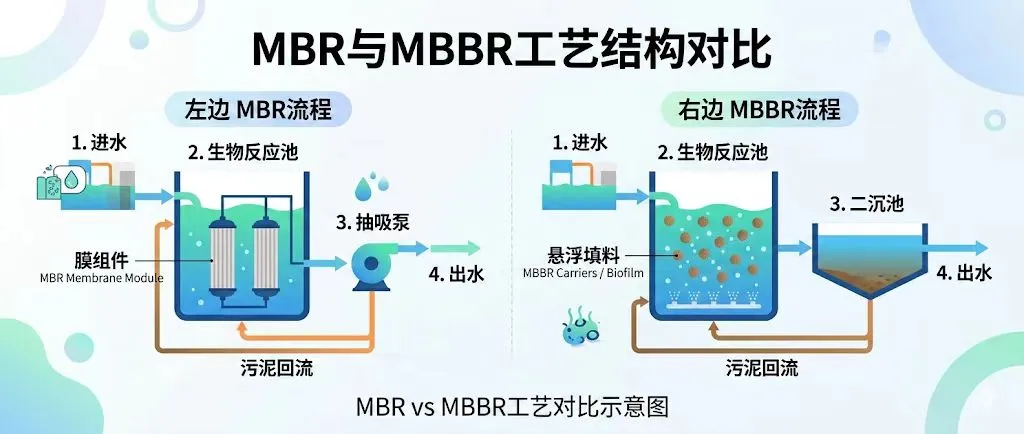
MBR uses a membrane for filtration.
MBBR gives microbes extra “living space” .
One strengthens sludge-water separation , the other strengthens biological treatment .
1. First, understand the core of wastewater treatment
Most wastewater treatment essentially does two things:
- Step 1: microbes consume the pollutants
- Step 2: separate microbes from water
biological treatment sludge-water separation
The conventional activated sludge process is simple: aeration tank → secondary clarifier. MBR and MBBR are enhancements in these two steps.
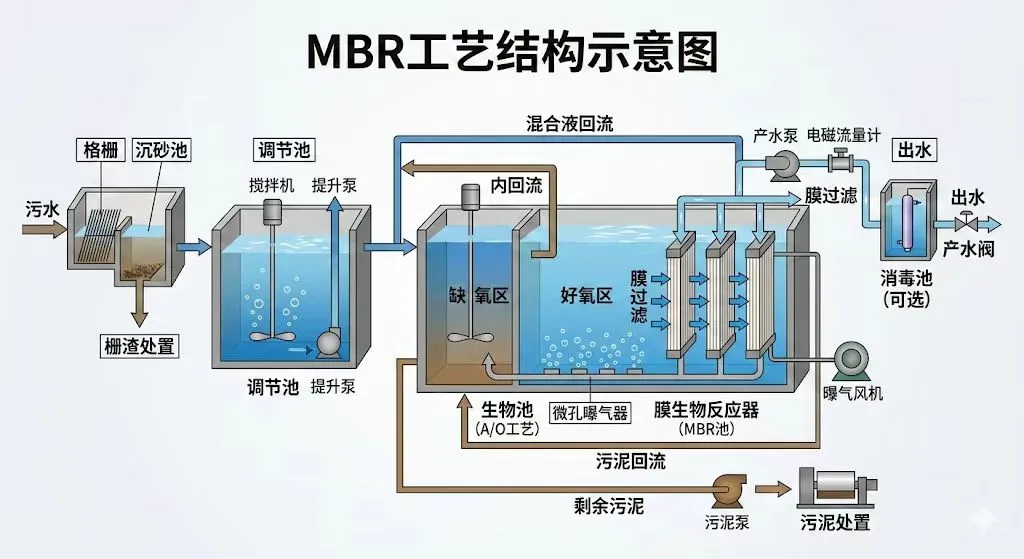
2. MBR: membrane replaces the secondary clarifier
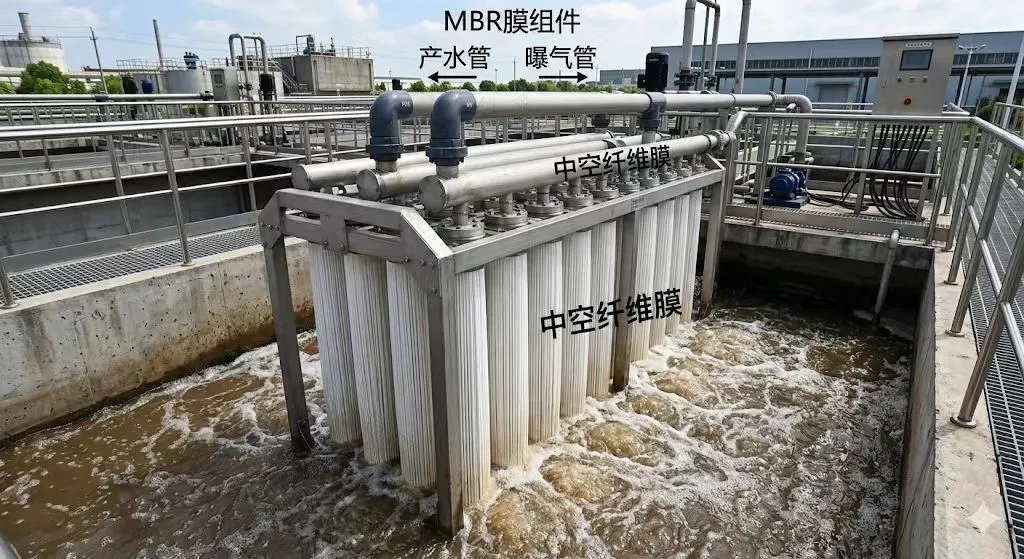
MBR stands for Membrane Bioreactor . The biggest change: replace the secondary clarifier with membrane filtration .
Imagine: traditional process “waits for sludge to settle”. MBR is like placing a very fine filter mesh in the water. Pore size 0.01~0.4 µm, much smaller than bacteria.
- Sludge is completely retained
- Suspended solids nearly zero
- Very clear effluent – many MBR effluents can be reused as reclaimed water
MBR operation feature: extremely high sludge concentration.
Conventional activated sludge: MLSS ~2000–4000 mg/L.
MBR: MLSS usually 6000–12000 mg/L → more microbes, higher efficiency, smaller tank volume.
MBR advantages
- Excellent effluent quality, SS ~0, very low turbidity
- Stable compliance with Class 1A or higher
- Small footprint (no secondary clarifier)
- Stable system – no sludge washout
- Good nitrogen removal (long SRT allows nitrifiers to thrive)
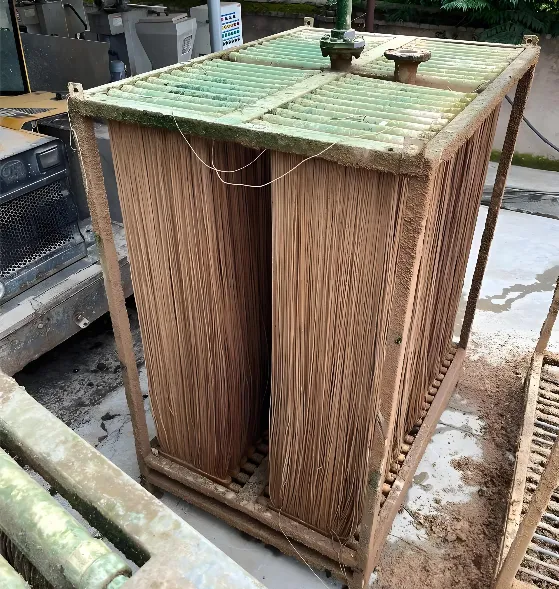
MBR challenges
- Membrane fouling – leads to: lower flux, higher suction pressure, increased energy use
- Requires: air scouring, backwashing, chemical cleaning
- Membrane replacement every 3–5 years
- Higher energy consumption (membrane scouring suction)
3. MBBR: more “living area” for microbes
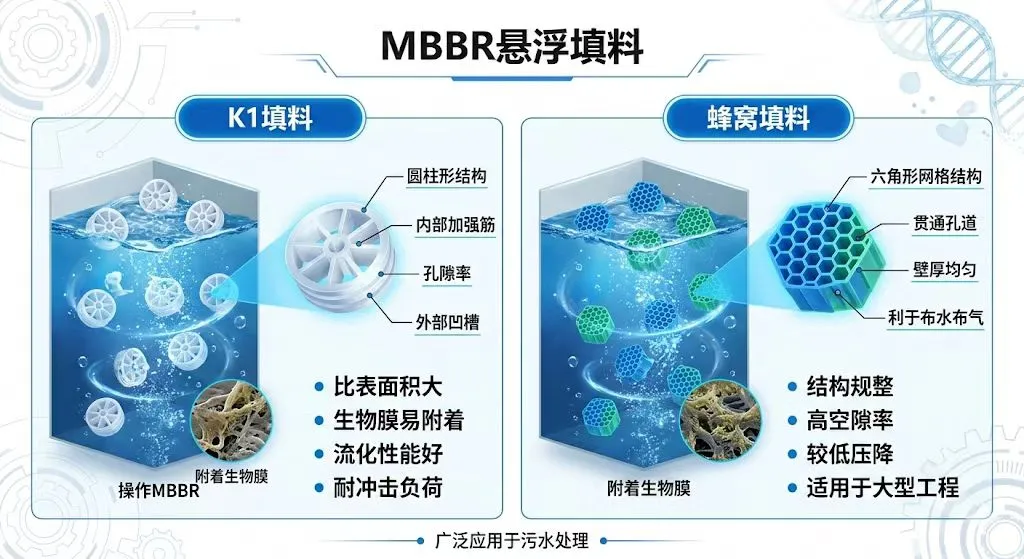
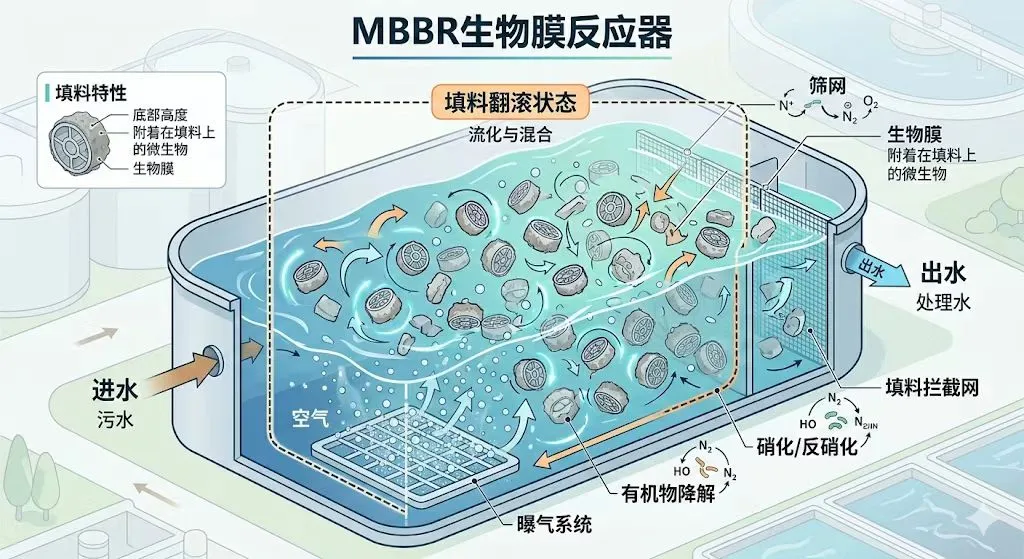
MBBR stands for Moving Bed Biofilm Reactor . This approach does not change sludge-water separation; instead, it increases the microbial population .
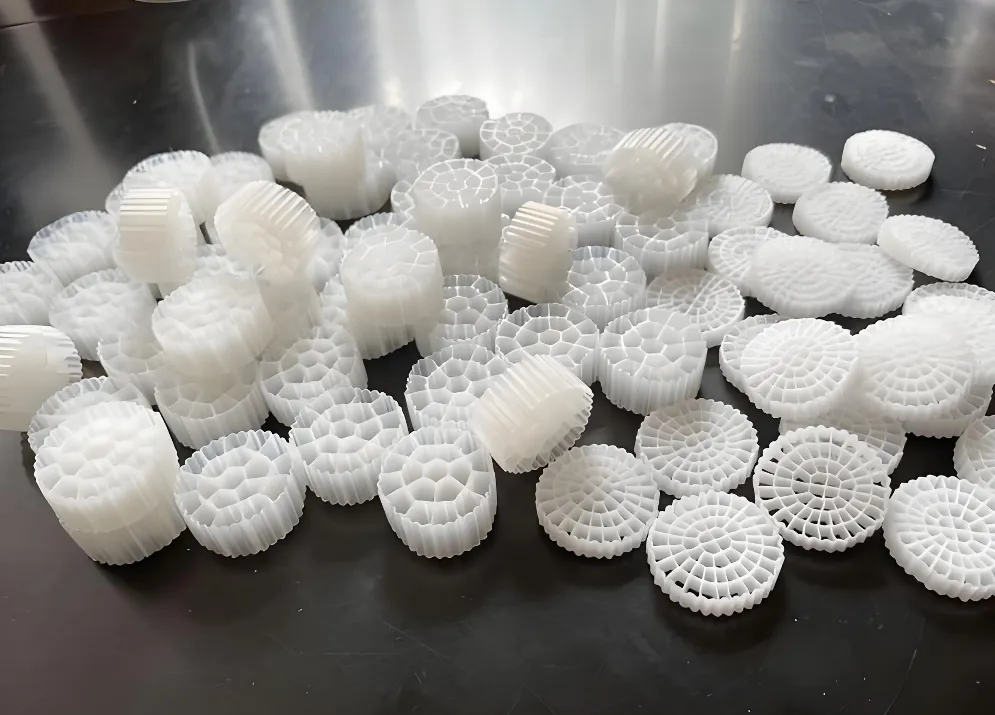
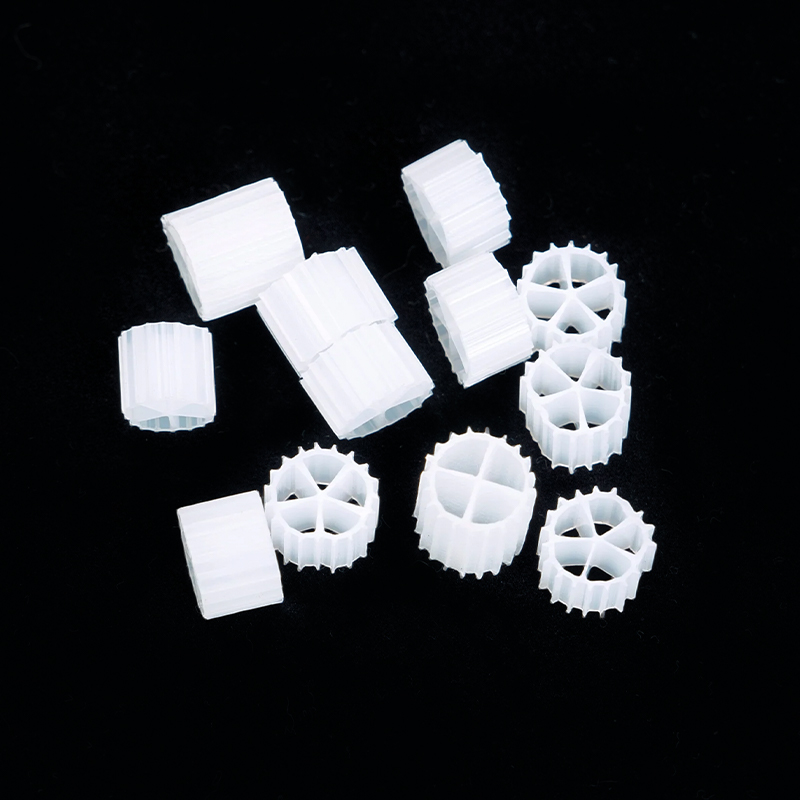
How? By adding suspended carriers (plastic media) into the aeration tank. They move and tumble with aeration, and each carrier grows a biofilm.
Think of it this way: Conventional activated sludge – microbes are “suspended in water”. MBBR has two parts: suspended sludge biofilm on carriers → total biomass increases significantly.
Why MBBR is shock-resistant: biofilm on carriers is not easily washed out. When water quality fluctuates, the attached biofilm stabilises the system. That’s why many industrial projects prefer MBBR.
MBBR advantages
- Strong shock-load resistance
- Biofilm not easily lost → stable system
- Easy retrofit – just add carriers in existing tanks
- Simple operation, no membrane equipment
- Lower energy consumption (similar to conventional aeration)
MBBR limitations
- Effluent quality ceiling – still uses secondary clarifier
- Effluent SS and turbidity usually higher than MBR
- Potential issues: carrier accumulation, uneven aeration
4. MBR vs MBBR: how to choose?
Focus on three questions:
- Effluent requirements – if reuse / high standard / surface water standards → MBR is better (membrane removes almost all SS).
- Footprint – if space is tight → MBR has an advantage (no clarifier).
- Investment & operation – if stability, cost, and simple management are priorities → MBBR is often more suitable, especially for upgrading old plants.
5. More projects now use a “combined approach”
In some projects, the two are combined: MBBR MBR – carriers are added to the MBR bioreactor. Benefits: higher biomass and reduced membrane fouling. Many high-standard WWTPs adopt this concept.
6. Final summary
MBR = strengthens sludge-water separation – core equipment: membrane – goal: high effluent quality.
MBBR = strengthens biological treatment – core: suspended carriers – goal: increase biomass and system stability.
Simple analogy: MBR adds a “superfine filter net” to the water; MBBR puts many “microbe houses” in the tank.
One pursues ultimate effluent; the other emphasises stability and economy.
Discussion topic
In the projects you have participated in, which process is used more – MBR or MBBR? Feel free to share your experience in the comments.
This article is for technical sharing and exchange. If there are copyright issues, please leave a message and we will handle it promptly.
MBR · MBBR · wastewater technology · 2026
Cooperemos con la protección del medio ambiente de Yixing Hengye
Contact UsProductos relacionados
- Categorías de productos
- Máquina de deshidratación de lodos
- Filtro de rodillo
- Máquina de flotación por aire disuelto (DAF)
- Barra Mecánica Rotativa
- Dispositivo de dosificación
- aireador
- Material de embalaje biológico
- Otros equipos de tratamiento de aguas residuales
- Contáctenos
-
-
[email protected]

[email protected] -
+86-13812201185

-
+86-13812201185

-
No. 20, Saite Road, aldea de Gaoyao, ciudad de Gaocheng, ciudad de Yixing, ciudad de Wuxi, provincia de Jiangsu, China

-



